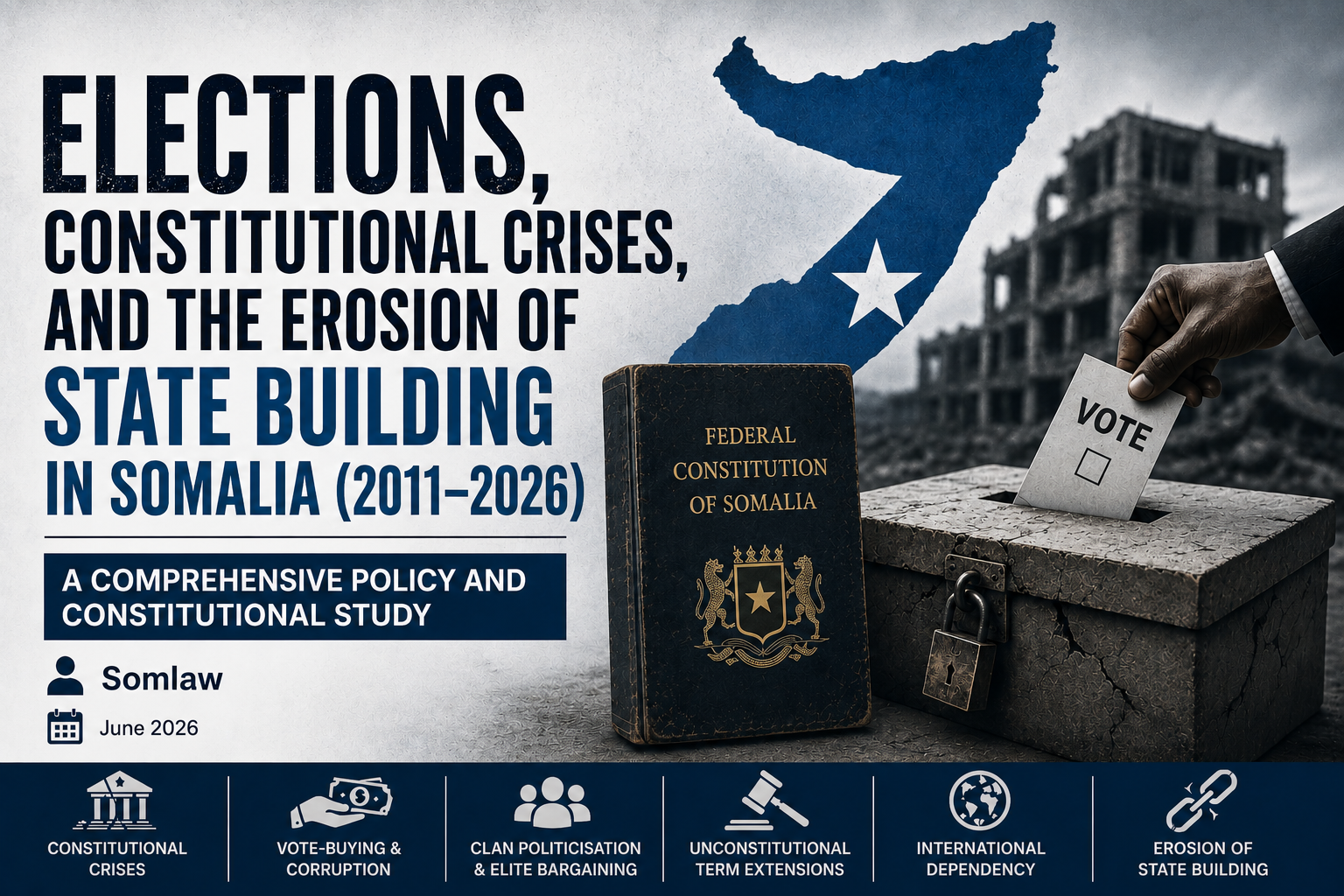
Somalia’s electoral cycles since 2011 have followed a disturbingly consistent pattern: constitutional timelines treated as negotiable, incumbents resisting timely transitions, systematic bribery at every level of the electoral chain, politically captured electoral management bodies, and international intervention to enforce outcomes that domestic institutions cannot enforce themselves. Each cycle has been approached as though the mere repetition of elections — without reforming the institutions and constitutional architecture that produced the previous failure — would somehow yield a different result. It has not.
This study examines every electoral cycle from the 2011 Kampala Accord through the forthcoming 2026 elections, identifying the six structural mechanisms through which elections in Somalia have eroded rather than consolidated state-building. It also provides a constitutional analysis of Somalia’s unbuilt institutional architecture — the missing Constitutional Court, the captured Electoral Management Bodies, and the ambiguities of federal power that make every election a constitutional crisis in waiting.
The study concludes with integrated legal, constitutional, and policy recommendations for Somali policymakers, federal member state leaders, and international partners.